Showing posts with label Newspapers in Art. Show all posts

Thursday, May 7, 2009

The Mourning Edition: Newspapers in Art Part II


Slide 19
Guest Blogger Sophie Collyer

“In the war, things were in terrible turmoil, out of parsimony, I took what I could because we were now an impoverished country. One can even shout with refuse, and this is what I did.”
–Kurt Schwitters

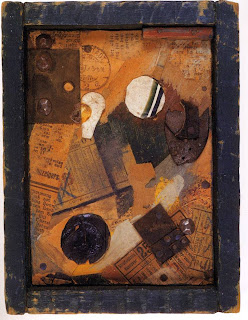
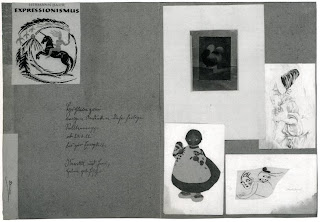
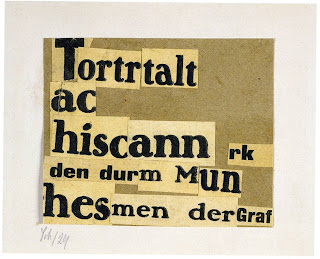
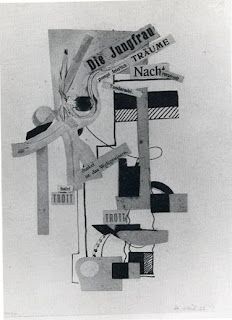
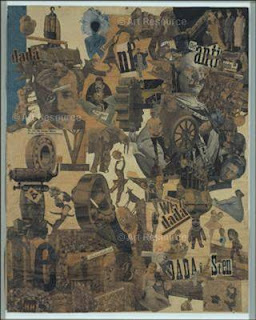
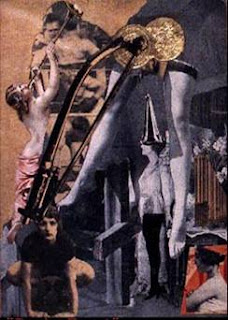
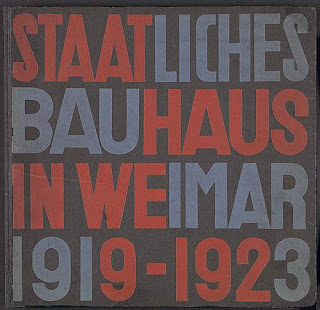
In the wake of World War I, the attitude towards the newspaper in Germany was not as celebratory as that of the Cubists. Artists of Neue Sachlichkeit and Dada condemned the post-war bourgeois newspaper tycoons’ militarism and apathy towards the victims and veterans of the War. However, they could not escape the ever presence of the newspaper torn up on street corners and hung neatly in cafes—they lived in a verbal environment. Newspapers had a daily life. They were pertinent at one moment, but outdated the next, tossed away and used for purposes from wrapping meat to collage. Otto Dix in Prague Street depicts a broken veteran on the street with a torn piece of newspaper; both are old news, modern refuse. Dada artists like Hannah Höch and Kurt Schwitters used photomontage and collaged poems as a means to mimic the chaos of modern life, thus brining form to content. Newspapers were the perfect media for this anti-art group whose famed member, Duchamp, declared the end of painting. The German Bauhaus addressed the newspaper as well, mainly in the realm of typography. As opposed to typefaces that tried to exemplify an idea or status, they advocated modern sans-serif fonts of ultimate clarity. Works of this type were banned by National Socialists in 1937 and Neo-classical figural works and classical typefaces became the state mandated standard.

Wednesday, May 6, 2009

The Mourning Edition: Part I

Guest Blogger Ksenia Yachmetz

“You are tired at last of this old world…
You read prospectuses catalogues and posters which shout aloud
Here is poetry this morning and for prose there are the newspapers
There are volumes for 25 centimes full of detective stories…
Announcements and billboards shriek like parrots
I love the charm of this industrial street…”
-Guillaume Apollinaire, “Zone”

At the turn of the twentieth century, Pablo Picasso and the French Cubists inaugurated modernity by incorporating newsprint directly into art. From referential representations in oil paintings to actual clippings in collages, the newspaper became a central element in the compositions of avant-garde artists across Europe. The Italian Futurists not only employed newsprint in art but also published their first manifesto in Le Figaro, a daily newspaper in Paris. This is evidence of the medium's rise in both popularity among and exposure to the public. The newspaper also lent itself well to the ambitions of the Russian Constructivists. They used its format, headlines, and photographs as elements in designing magazine layouts, book covers, and socialist propaganda posters.

Each of the examples included in this gallery use newsprint for both its aesthetic and its functional value. As described in Apollinaire's poem, the newspaper was a representation of new city life. No longer isolated in small towns and villages, people poured into cities and embraced a metropolitan lifestyle, which included everything from dance halls to factories. Because the newspaper could easily and clearly transfer messages across time and space, artists used it as tool for cross-cultural communication in an increasingly industrialized and urbanized society.

Thursday, April 30, 2009

The Mourning Edition: Newspapers in 20th Century Art

(Robert Gober, Newspapers)

By 1996, more than 1,100 newspapers had established a presence on the Internet. The printed news has competed for readership with its online counterpart ever since. As we contemplate the possible absence of newspapers in our circadian routines, let us look back on the paper’s contributions to 20th century art.


Extremely cheap, widely circulated, easily obtainable, and blatantly connoting time and place, the ubiquitous paper presents itself as a potent material for any artist.


(Pablo Picasso, Glass and Bottle of Suze)

Entering the 20th century, Pablo Picasso, Carlo Carra, Vladimir Tatlin, and the artists of the avant-garde, deemed newsprint a material worthy of the canvas. Living in a newly industrialized and urban society, they saw the newspaper as both a product and embodiment of their time and place.


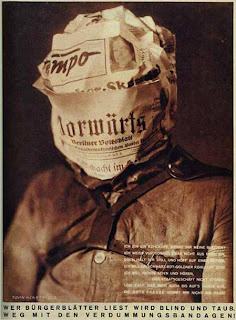
(John Heartfield, Those Who Read Bourgeois Papers Will Become Blind and Deaf)

Artists in Germany, such as the members of the Neue Sachlichkeit, Dada and Bauhaus groups, had a much more negative view of the press. They understood it as a bourgeois commodity that promoted a traditional social hierarchy—so they tore it up and redesigned it to make it their own.


(Andy Warhol, 129 Die in Jet!)

American pop artists working in the 1950s and 1960s used newspapers as both the material and subject of their work, further appropriating the techniques and modes of popular media.


(Group Material, Aids Timeline)

Protesting the assumption of the newspaper as objective truth, international artists of the late 20th and early 21st century placed the paper in their work to provide platforms for mischaracterized and often unreported individuals and events. They employed the newspaper in painting, sculpture, performance, and installation to activate social change.


In Gustav Metzger’s 100,000 Newspapers, one is confronted with the physical mass of yesterday’s printed news, ever decaying. The specter haunting Metzger’s piece reflects our moment, on the cusp of total dematerialization.